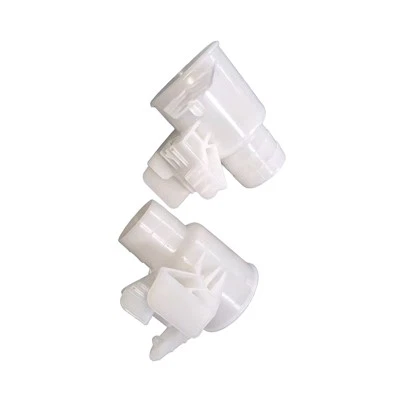
As a supplier of fuel filler caps, I’ve had the privilege of delving deep into the intricacies of their design. The fuel filler cap is not just a simple cover for your vehicle’s fuel tank; it’s a crucial component that plays a significant role in the overall performance, safety, and environmental impact of a vehicle. In this blog, I’ll share the key design principles that guide the creation of high – quality fuel filler caps. Fuel Filler Cap
Sealing Performance
One of the most fundamental design principles of a fuel filler cap is its sealing performance. A proper seal is essential to prevent fuel vapor from escaping into the atmosphere. Fuel vapors contain harmful pollutants such as hydrocarbons (HC), which contribute to air pollution and smog formation. When a fuel filler cap fails to seal correctly, these vapors can leak out, leading to increased emissions and potential health risks.
To achieve a reliable seal, we use high – quality rubber gaskets. These gaskets are designed to fit precisely around the fuel filler neck. The material of the gasket is carefully selected to be resistant to the corrosive effects of fuel. For example, nitrile rubber is a popular choice due to its excellent fuel resistance and durability. The shape and dimensions of the gasket are engineered to create a tight, interference fit with the filler neck. This ensures that even under varying temperatures and pressures, the seal remains intact.
Another aspect of sealing performance is the cap’s ability to withstand the internal pressure of the fuel tank. As fuel is consumed and the temperature changes, the pressure inside the tank can fluctuate. A well – designed fuel filler cap should be able to maintain its seal under these pressure variations. This is achieved through a combination of the cap’s structure and the gasket’s properties. The cap is often designed with a locking mechanism that provides additional force to keep the gasket in place and maintain the seal.
Safety Features
Safety is a top priority in the design of fuel filler caps. One of the key safety features is the anti – siphoning mechanism. This mechanism prevents unauthorized access to the fuel tank by making it difficult to siphon fuel out. It typically consists of a series of baffles or valves inside the cap. These components block the flow of fuel when an attempt is made to insert a siphon tube.
In addition to anti – siphoning, fuel filler caps are designed to prevent over – pressurization of the fuel tank. If the pressure inside the tank builds up too much, it can lead to dangerous situations, such as fuel leakage or even an explosion. To address this, many fuel filler caps are equipped with a pressure relief valve. This valve opens when the pressure inside the tank exceeds a certain threshold, allowing excess pressure to escape safely.
Furthermore, the design of the cap should be user – friendly to prevent accidental spills. The cap should be easy to open and close, with clear markings indicating the correct way to operate it. For example, some caps have a simple twist – and – lock mechanism that is intuitive for users. This reduces the likelihood of fuel being spilled during refueling, which not only wastes fuel but also poses a fire hazard.
Durability and Longevity
A fuel filler cap needs to be durable enough to withstand the harsh conditions it is exposed to. It is constantly in contact with fuel, which can be corrosive, and it is also subject to environmental factors such as heat, cold, and moisture. To ensure durability, we use high – quality materials in the construction of our fuel filler caps.
The outer shell of the cap is often made of a strong plastic or metal. Plastic caps are lightweight and resistant to corrosion, while metal caps offer greater strength and durability. The choice of material depends on the specific requirements of the vehicle and the customer.
The internal components, such as the locking mechanism and the pressure relief valve, are also designed to be long – lasting. These components are made of materials that can withstand repeated use and the forces exerted on them. For example, the springs used in the pressure relief valve are made of high – quality steel that can maintain its elasticity over time.
Regular maintenance and inspection of the fuel filler cap are also important for its longevity. We provide guidelines to our customers on how to properly care for the cap, such as cleaning it regularly and checking for signs of wear or damage.
Compatibility
Fuel filler caps need to be compatible with a wide range of vehicles. Different vehicles have different fuel filler neck sizes, shapes, and thread patterns. Our design process takes into account these variations to ensure that our caps can fit a variety of vehicles.
We conduct extensive research on the specifications of different vehicle models. This includes measuring the dimensions of the fuel filler necks, the thread pitch, and the overall shape. Based on this data, we design our caps with interchangeable parts or adjustable features. For example, some of our caps have a threaded insert that can be adjusted to fit different thread patterns.
In addition to physical compatibility, the cap should also be compatible with the vehicle’s emissions control system. The cap needs to work in harmony with the evaporative emissions control system to ensure that the vehicle meets the required emissions standards.
Aesthetics and Branding
While the functional aspects of a fuel filler cap are of utmost importance, aesthetics also play a role in its design. A well – designed cap can enhance the overall appearance of a vehicle. We offer a variety of styles and finishes to meet the aesthetic preferences of our customers.
Some caps have a sleek, modern design, while others may have a more traditional look. We also offer customization options, such as adding the customer’s logo or brand name to the cap. This not only adds a personal touch but also helps with brand recognition.
Cost – effectiveness
As a supplier, we understand the importance of cost – effectiveness. Our design process aims to balance the quality and performance of the fuel filler cap with the cost of production. We use efficient manufacturing processes and source materials from reliable suppliers at competitive prices.
By optimizing the design and production process, we can offer high – quality fuel filler caps at a reasonable price. This allows our customers to get the best value for their money without compromising on the quality and performance of the product.

In conclusion, the design of a fuel filler cap is a complex process that involves multiple principles. Sealing performance, safety features, durability, compatibility, aesthetics, and cost – effectiveness are all important factors to consider. As a fuel filler cap supplier, we are committed to producing caps that meet the highest standards in all these areas.
Plastic Auto Parts If you are in the market for high – quality fuel filler caps, we invite you to contact us for a detailed discussion about your requirements. We can provide you with samples, technical specifications, and pricing information. Our team of experts is ready to assist you in finding the perfect fuel filler cap for your vehicles.
References
- SAE International Standards on Fuel Filler Caps
- Automotive Emissions Control Handbook
- Materials Science and Engineering for Automotive Components
Ningbo Xiaohua Plastic Industry Co., Ltd.
We are one of the most experienced fuel filler cap manufacturers and suppliers in China, specialized in providing high quality customized service to global clients. We warmly welcome you to wholesale durable fuel filler cap in stock here from our factory.
Address: No. 878, Gulin Section, Yinxian Avenue, Haishu District, Ningbo City, Zhejiang Province
E-mail: 13736009355@163.com
WebSite: https://www.cnxiaohua.com/
